The Best Places to See the Northern Lights
Alaska, Iceland, Norway, Sweden and Finland: five of the best places on Earth to watch the sky ignite. Scott Dunn's tailor-made Northern Lights holidays let you choose exactly how you experience it. Sleep in a luxury tented camp, a glass igloo, a log cabin deep in the forest, a tree house, an ice hotel, or a classic mountain lodge with its own private terrace for watching the sky.
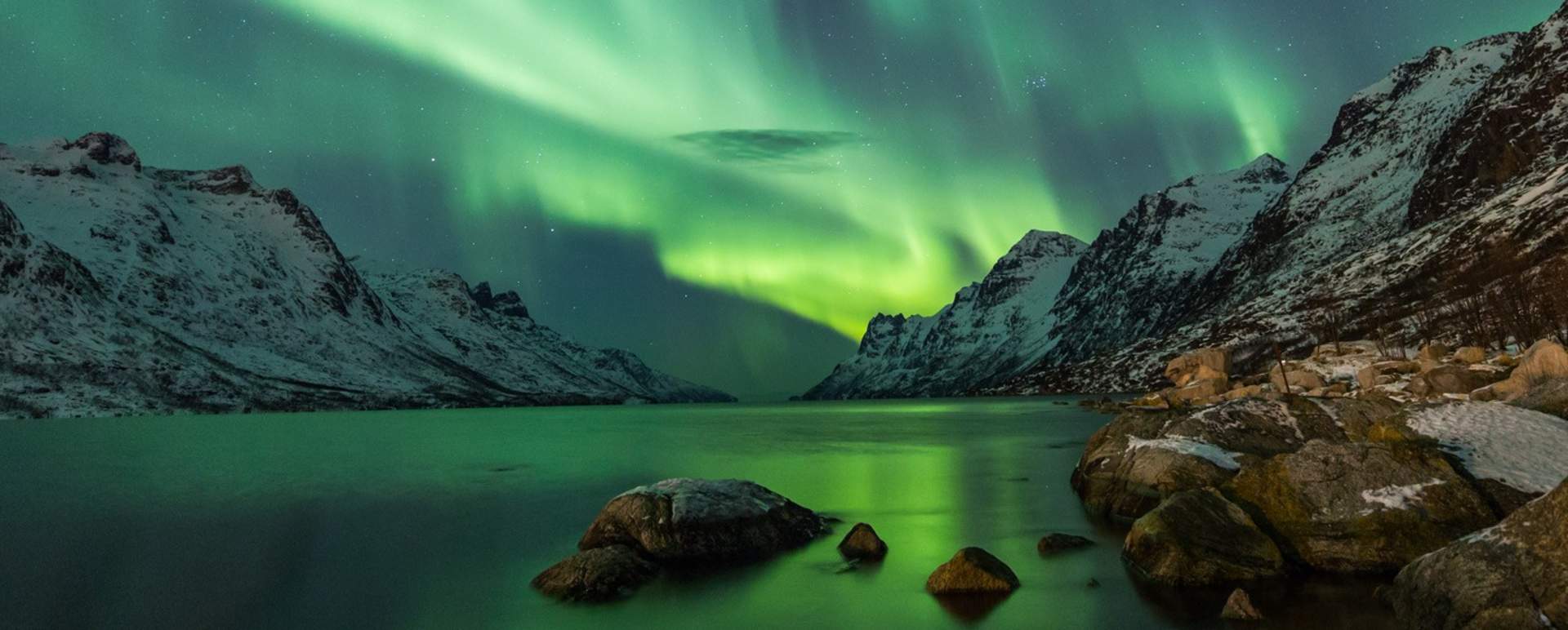
The Aurora Borealis, or Northern Lights, are one of Earth's most spectacular natural phenomena and sit at the top of many bucket lists. They can be elusive and unpredictable, which makes catching a glimpse of them even more breathtaking. Activity rises and falls with the sun's roughly 11-year cycle, and the years around each peak are consistently the best time to chase them. If you're seeking the Aurora, here's our all-encompassing guide to nature's greatest light show.
What are the Northern Lights?
The Aurora Borealis is visible in the northern hemisphere while the Aurora Australis can be seen in the southern hemisphere. These magnificent "dancing lights" occur when charged particles from the sun hit atoms in our atmosphere, which then release light particles.
We see vibrant Aurora displays when geomagnetic storms occur, and a coronal hole opens on the sun. This causes a Coronal Mass Ejection which then creates the incredible displays sweeping across the night sky.
The sun follows an 11-year cycle, with the current cycle reaching its peak in 2024, the strongest in over 20 years. Displays are strongest in the years immediately around each peak and can still be spectacular for a year or two after, before gradually becoming less frequent and harder to predict as the cycle declines. Some of the most powerful storms of a cycle can arrive a year or two after the peak itself, as the sun's magnetic field reorganises, which is why 2027 is still shaping up to be an excellent year to chase the Aurora.
What Colour is the Aurora Borealis?
Usually when we think of the Aurora, we picture vivid green-yellow lights, but the colours can change depending on which gases in our atmosphere are charged by the sun. Green is produced by oxygen closer to the Earth's surface, whereas a rare, red Aurora occurs when high-altitude oxygen is charged. Purple and blue Aurora happen when nitrogen is charged.
Where to See the Northern Lights?
The further north you travel the more likely you are to see the Aurora Borealis, with remote locations, further away from light pollution, offering darker skies. Alaska, Iceland, Finland, Sweden, and Norway are the five best places for Northern Lights holidays. Imagine our Lapland guides waking you at night so you never miss a display, or watching from a fjord-side lodge in Norway's Lyngen Alps as the display doubles, reflected across the water below. Below are some of our favourite hotels offering the best conditions for catching a glimpse of the Aurora.
Iceland

Best time to see the Northern Lights: September to March, between 9 pm and 2 am.
Best time to visit generally: June-August, December & January
Iceland is known as the Land of Fire and Ice, thanks to its vast volcanic landscape and glaciers. Located on the southern edge of the Arctic Circle, it's also one of the best places in the world to witness the Northern Lights.
It's easy to find real darkness here, which is essential for seeing the display. Iceland is one of only two places on Earth, alongside Greenland, where the lights can in theory be seen from anywhere in the country. With a population of around 395,000, the remote corners of the island stay largely free of light pollution.
September through to March is the best time to see the Northern Lights in Iceland, with peak viewing typically between 9pm and 2am.
A sighting is never guaranteed, but Iceland rarely disappoints in the meantime: hot springs, waterfalls and ice caves give every evening spent waiting for the sky to turn a memorable backdrop of its own.
Explore our Iceland Northern Lights tours.

Hotel Ranga, Iceland
With minimal light pollution there's a good chance to witness the Northern Lights at Hotel Ranga in winter and it features in our Northern Lights Safari across Iceland. During these months the hotel provides Aurora forecasts and wake up calls so guests don’t miss out on viewings. Witness the Northern Lights and Midnight Sun from the glass walled restaurant, the balcony from your room or suite or even from one of the geothermal powered hot tubs between the hotel and its namesake, the River Ranga.

Torfhus Retreat, Iceland
A truly unique retreat where you can stay in your own traditional turf house ‘Torfhus’ offering a superb level of quirky luxury in this very special location. These two-bedroom properties, centred around the Langhus where you can enjoy bespoke dining, also benefit from their own private geothermally heated hot tub, making this a wonderful place of relaxation. Due to its remote location in Southern Iceland, you are perfectly placed to spot the Northern Lights during the winter months.
Finland (North, Finnish Lapland)

Best time to see the Northern Lights: August to early April, between 10 pm and 2 am.
Best time to visit generally: December-March
Finland is often considered the world's happiest country, nestled in the heart of Scandinavia and home to Finnish Lapland, its northernmost region. At a latitude of 67° north, Finland sits directly on the path of the Northern Lights.
With around 75% of its surface covered in forest and an average December snowfall of 30cm, Finland feels like a true winter wonderland when the Aurora Borealis dances above. The lights are best viewed the further north you travel, making Finnish Lapland the ideal base; they're visible on roughly 200 nights a year here.
Rovaniemi, Inari and Levi are some of the best places to visit, offering husky sledding, wilderness hideaways and glass-roofed igloos to stay in during your stay. Peak light season runs from late August to early April, with the best sightings after nightfall, between 10pm and 2am.
Beyond the night sky, Finland's glistening snowy wilderness and mountain backdrops give every day here a beauty of its own, whether you're snowmobiling, skiing, or visiting Santa's grotto in Lapland.
Explore our Finland Northern Lights tours.

Wilderness Hotel Inari, Finnish Lapland
There is so much to enjoy during your stay here in this beautiful location on the edge of Lake Inari. The vast, frozen lake offers the perfect playground to enjoy a plethora of winter activities, from snowmobiles to cross-country skis, and the Wilderness Hotel Inari has plenty on offer, all of which can be enjoyed on a private basis, or as part of a small group. Inari is one of the best places in the world to see the Northern Lights, heightening your chances of seeing illuminated skies here.

Beana Laponia, Finnish Lapland
Beana Laponia in Meltaus offers a wilderness hideaway with a private feel and the promise of adult only accommodation for couples and friends. Stay in remarkable Lappish surroundings with a private toboggan slope, husky sledding tours and the chance of seeing the Aurora Borealis from the outdoor hot tub with a drink in hand.

Golden Crown Glass Igloos, Finnish Lapland
Make the most of your trip to Finnish Lapland by sleeping in one of the Golden Crown Glass Igloos. With the northern skies above you, should the dancing lights appear you will have front row seats from the comfort of your own motorised bed to optimise viewing. As daylight breaks the igloos also offer magnificent views across undulating fells and snow covered trees..

Aurora Village, Finnish Lapland
Surrounded by snow capped forests you will be enchanted from the moment you arrive at Aurora Village. Every part of this village will charm you, from the roaming reindeer, bespoke luxury cabins, and outstanding facilities where you can ice skate on the frozen lake or relax in the outdoor hot tub. A very special addition are the bespoke Aurora cabins with glass ceilings, allowing you to relax in privacy whilst looking for the Northern Lights. The sauna is a real highlight, with panoramic views over the frozen lake, so you can gaze upon the endless snowy wilderness whilst enjoying the warmth inside.
Sweden (Northwest, Swedish Lapland)

Best time to see the Northern Lights: September to March, between 6 pm and 2 am.
Best time to visit generally: July-April
Sweden is famous for its displays of the Aurora Borealis, particularly in the arctic wilds of Swedish Lapland, in the country's northwestern corner.
Covering a quarter of the country, Swedish Lapland is home to mountains, forests, wild rivers and frozen lakes. Abisko National Park, Kiruna and Luleå are considered some of the best places in Sweden for Northern Lights spotting, offering access to distinctive stays such as Sweden's Icehotel and Treehotel, and traditional Scandinavian tipis.
The long, dark nights between September and March are ideal for seeing the Northern Lights. On clear evenings, the best time to spot the display is between 6pm and 2am.
Swedish Lapland isn't short on arctic activities to complement aurora-spotting: ice-fishing, hovercrafting over frozen lakes and moose safaris all give visitors a unique holiday.
Explore our Sweden Northern Lights tours.
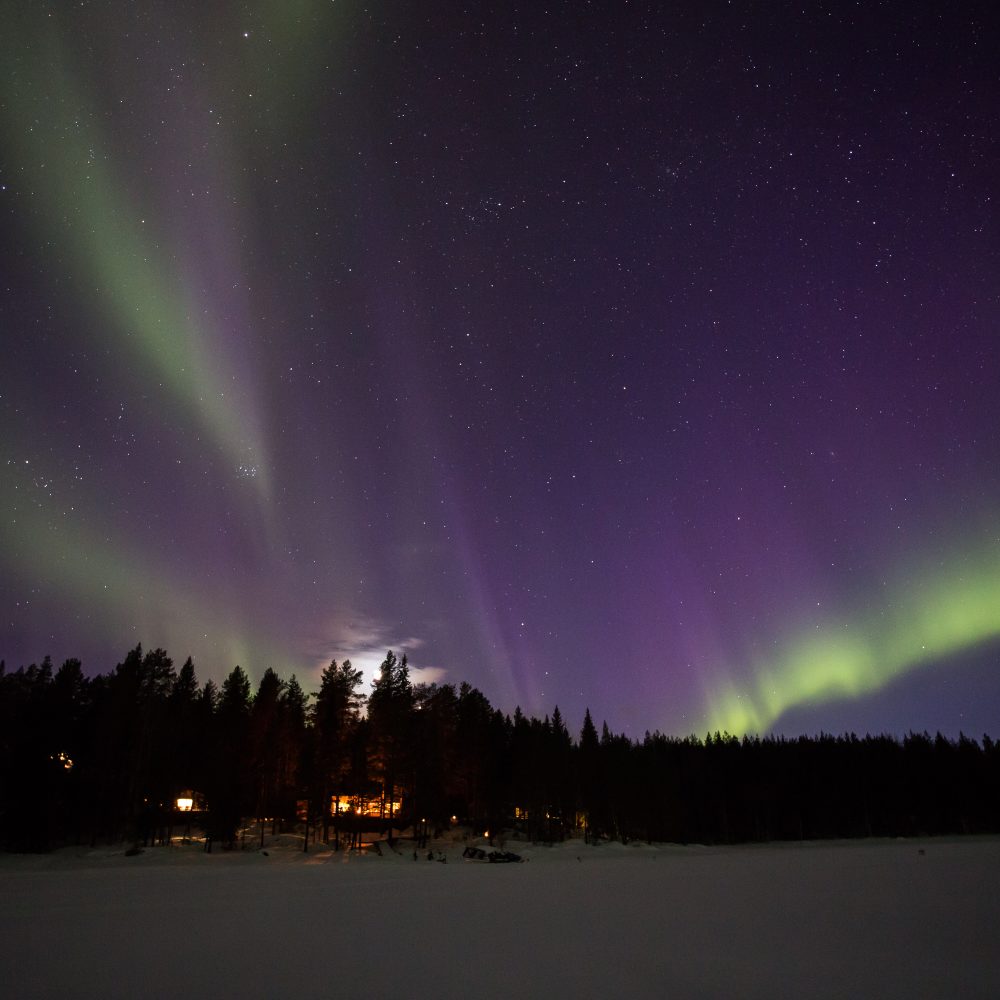
Aurora Safari Camp, Swedish Lapland
What could be better than an African-style tented camp experience in the wilds of Swedish Lapland from where you can sit back and watch the Aurora Borealis in all of its glory? Run by acclaimed photography, Fredrik Broman, you’ll get top tips on how to capture that perfect image of the Northern Lights. Sit around the camp fire, snuggled under reindeer furs, looking out over stunning views of the adjacent lake before trying activities such as husky sledding, snowshoeing, snowmobiles and ice fishing.
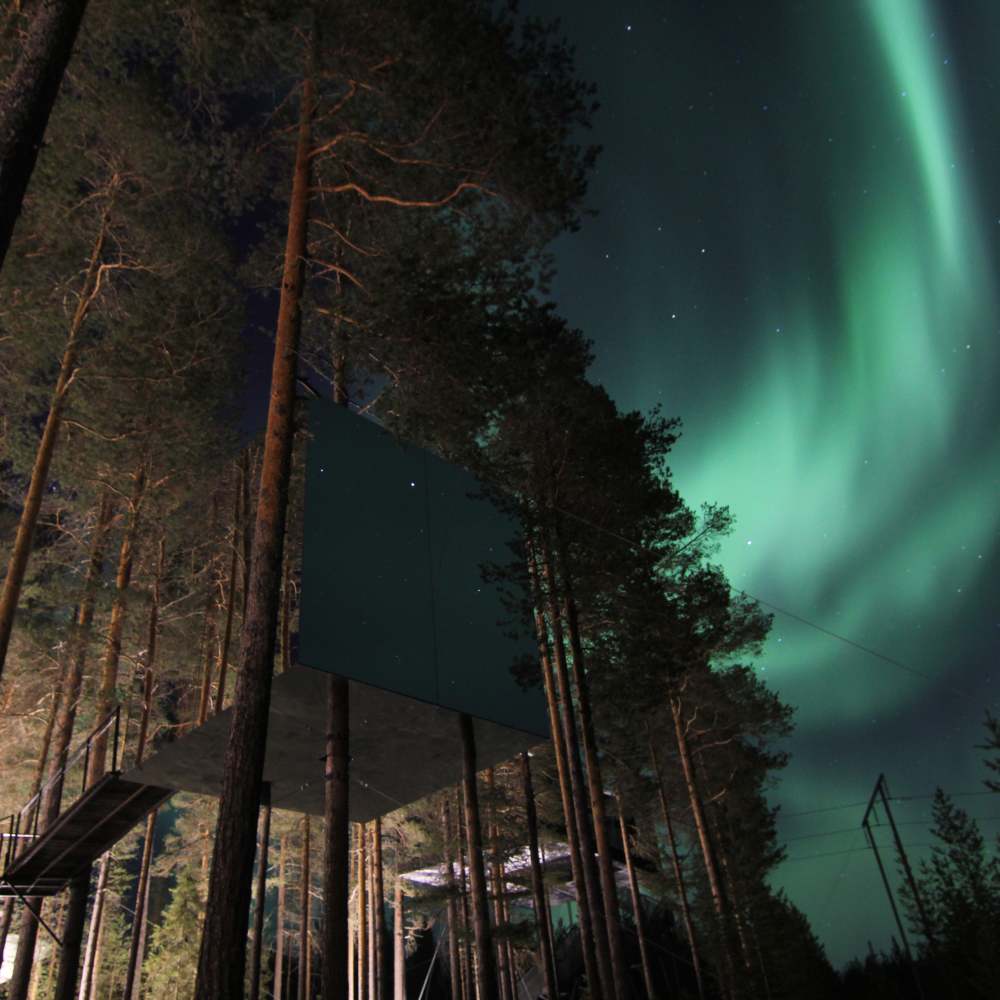
Icehotel & Treehotel, Swedish Lapland
Combine two totally unique hotels; one the designer Treehotel, and the other the legendary Icehotel in Sweden’s Lapland – with a multitude of activities on offer during the day, it won’t all be able seeing the Northern Lights, and meeting with the local Sami people is a real highlight. The two are linked by a lovely train journey through the snowy wonderfulness of wintery Sweden. Maybe combine your stay with a few nights in Stockholm.
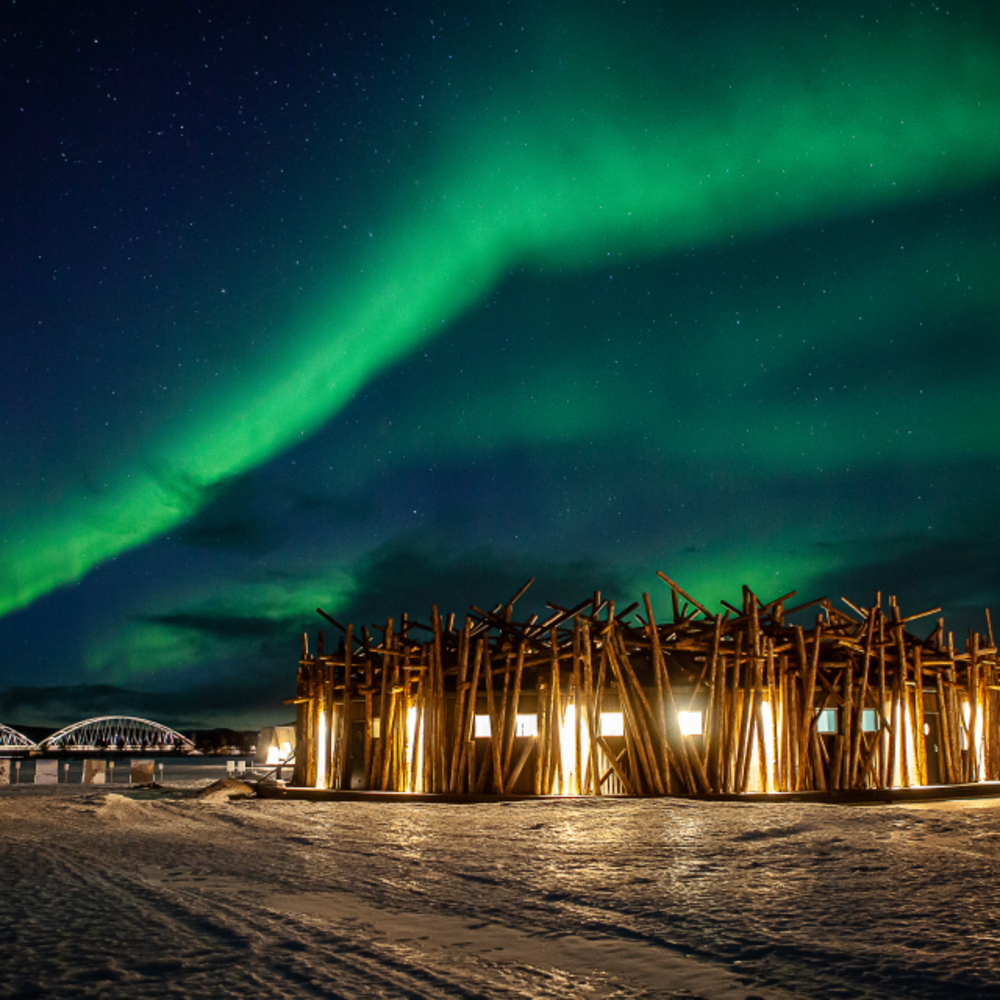
Arctic Bath Hotel, Swedish Lapland
The star of the show is the uniquely designed floating hotel on the river, which freezes over in the winter to create a truly magical experience. The central feature of the hotel is an open-air cold bath - offering a refreshing antidote after experiencing the different saunas or hot bath; the hotel has a strong focus on wellness offering detoxifying spa treatments. Why not be one of the first to stay here and indulge in all the luxury it has to offer?
Norway (North - Tromsø and Svalbard)

Best time to see the Northern Lights: September to March, between 6 pm and 1 am.
Best time to visit generally: All year round
Heading north to Scandinavia gives you plenty of options for hunting the Northern Lights, and Norway is one of the best. Its high northern latitude means longer, darker winter nights, putting popular spots firmly on the aurora belt and giving visitors a strong chance of catching the display.
Home to narrow fjords, lakes and landmarks like Nordkapp, the Lofoten Islands and Svalbard, Norway offers some of the most photographed Arctic scenery in the world.
Tromsø and Svalbard are regarded as the best places in Norway to see the lights. Hotels here offer views of snow-capped mountains, open log fires and hot tubs to warm up in after dark.
Norway's aurora season runs from September to March, with peak viewing between 6pm and 1am. Other local activities include snowmobiling, reindeer-driven sleigh rides, ice fishing and snowshoeing.
Explore our Northern Lights Norway tours.

Lyngen Lodge, Norway
Lyngen Lodge is possibly the most luxurious lodge you can find so far north in the Arctic Circle. You will fly to Tromso in Norway and drive across to Lyngen Fjord where the lodge is positioned. With a hot tub, fine dining and wonderfully comfortable rooms, you might think you are in a Scott Dunn chalet in the Alps – but look up and hopefully see the Northern Lights appear over the Fjord. There is a multitude of winter activities on offer, and if you like off-piste skiing you are in for a treat.
Alaska (North - Talkeetna and Denali National Parks)

Best time to see the Northern Lights: August to April, between 9 pm and 2 am.
Best time to visit generally: July-December
Across the pond, the US state of Alaska is considered one of the best places on earth to see the Northern Lights.
Although the lights can appear throughout the year, the strongest displays come during aurora season, from 21st August to 21st April, when long, dark nights give the sky room to perform.
Alaska is a vast wilderness state, and the further north you travel, the higher your chances of catching the display. Talkeetna and Denali National Park, which sit at around 63° north, both offer distinctive hotels and fly-in accommodation with dedicated Northern Lights packages. Their remote, unlit skies make displays here especially vivid.
It's worth building other activities around your search for the Aurora: dog sledding, hot spring bathing and glacial trekking are all popular options close to Alaska's aurora hotspots.
Explore our Northern Lights Alaska tours.

Sheldon Chalet, Alaska
From the moment you step off the helicopter at Sheldon Chalet, to be welcomed with champagne and seafood, your world becomes the frozen expanse of the glacier and the mountain peaks beyond. The location and elevation makes this a superb spot from which to see the Aurora Borealis and in turn makes this a once in a lifetime experience. With no mobile signal you can really sign off from the real world here and indulge in the isolation this unique property offers.
Tips for Your Northern Lights Tour
The Aurora Borealis occur year-round but are only visible at night - the darker the sky the clearer they appear. Late autumn to early spring, when the nights are longer, are the best months to see them. Here’s our checklist to make sure you have the best chance to see them for yourself:
- Find as little light pollution as possible - head away from busy towns or cities to rural areas. Even ships or wind farms can create a surprising amount of light pollution.
- Avoid a full moon - the smaller the moon, the darker the sky.
- The sky needs to be clear - the Aurora won’t be visible if it’s cloudy.
- October to March are the best months in the northern hemisphere.
- Face north!
- Give your eyes time to adjust to the dark - avoid looking at screens or lights before viewing.
How to Photograph the Northern Lights
While there is nothing quite like watching the Northern Lights dance through the sky, photographing them is also on many bucket lists. It can be possible to take great photos on your phone, depending on what device you have, following similar steps to the below if your phone camera has settings that can be adjusted.
Try these tips to take the best photos possible:
- Tripod – use one even for phone photography. You’ll need to have the shutter open for a few seconds to let light in for a longer exposure, which means photos taken on a handheld camera will blur.
- Wide aperture – this allows the camera to collect more light. Set your aperture between at least f4 to f2.8 – any lower than this and the images could become grainy.
- Set the camera to manual mode and focus – this allows you to have more control. Find the brightest star to focus your camera on or if there isn’t much in the sky set your camera to infinity focus.
- Slow shutter speed – start with 5 seconds and go up to 30.
- High ISO – set your camera to 2500 up to 4000.
- Use a timer or remote shutter trigger – even pressing the button on the camera or phone can cause enough movement to cause your photos to blur.
A Note from Our Experts:
“Each property we work with in Swedish Lapland offers good chances of seeing the Northern Lights as they are all in remote locations, away from light pollution. As they are a natural phenomenon, we can never guarantee that you will see them, but you are enhancing your chances when staying in these remote areas.
For a more experiential stay, head to the Treehotel, where you can stay in a treehouse suspended in the snowy forest and hopefully spy the illusive Northern Lights. I would recommend staying in the 7th Room for more space and comfort as well as having a balcony you can head out to when the lights are showing. For photography enthusiasts, Arctic Retreat is a great option, the owner is a Northern Lights photographer, and the guides and team here can assist with top tips on capturing the best photographs.”
Milly Darnell, Scott Dunn Travel Expert
Call us on 020 8682 5000 to start planning


