Price guide
Reviews (1)

Description

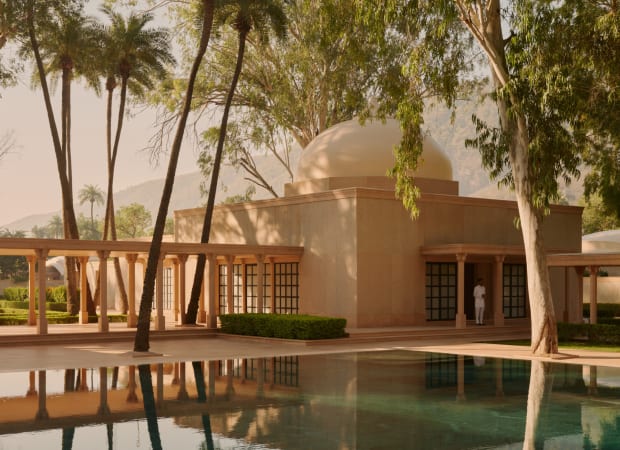
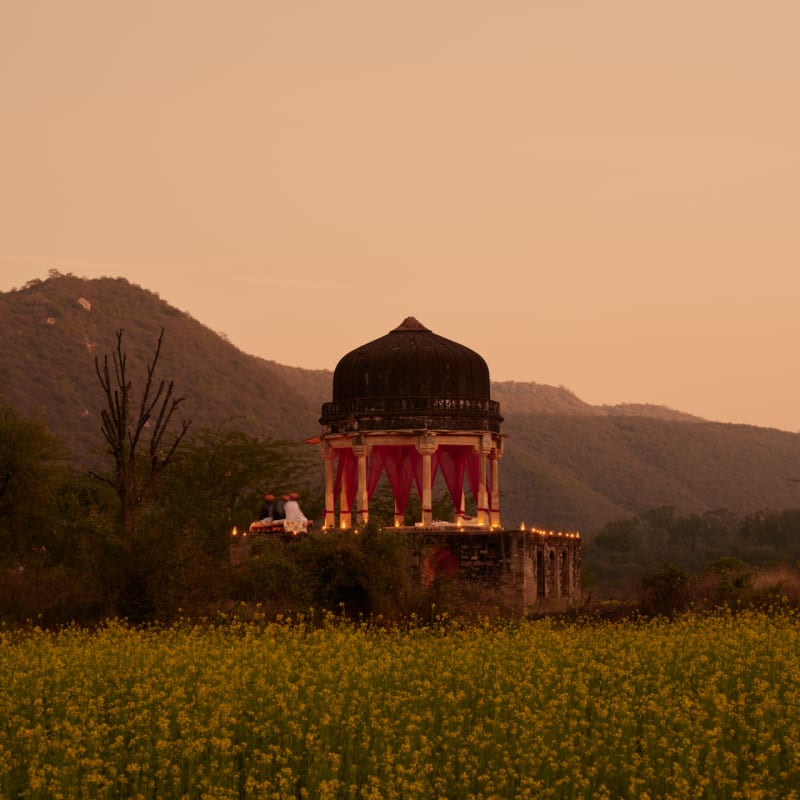
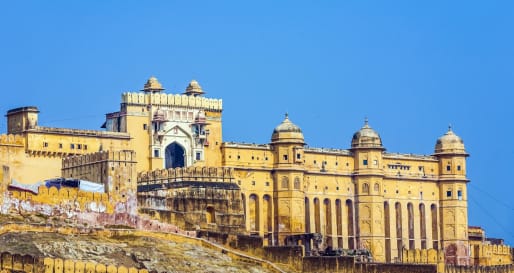
Amanbagh sits in isolation amidst the arid Aravalli Hills. The resort echoes the region’s Mughul architecture and provides the opportunity to witness first hand the traditions and culture of rural India.

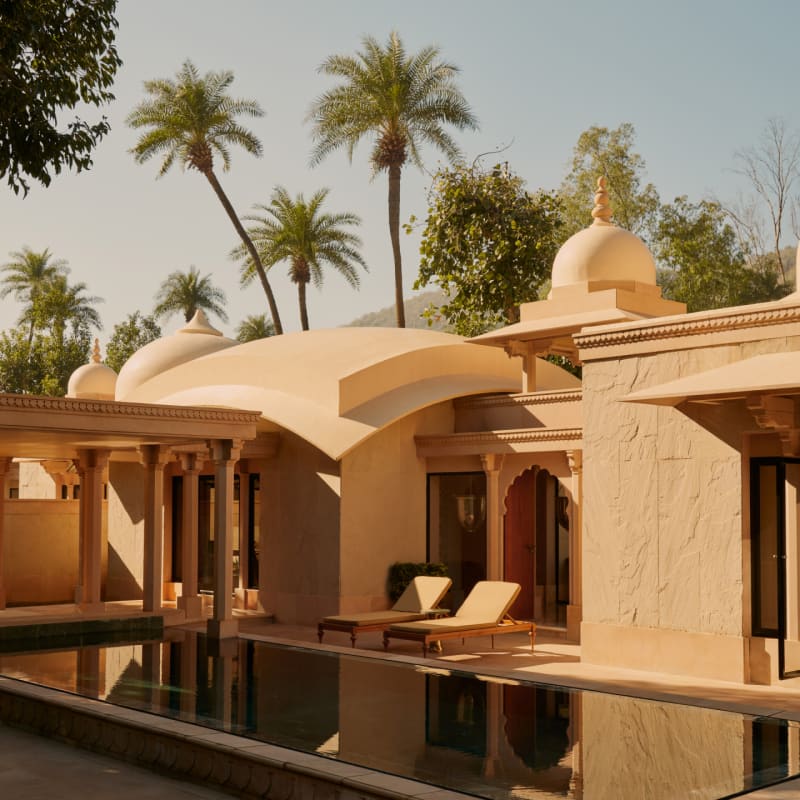
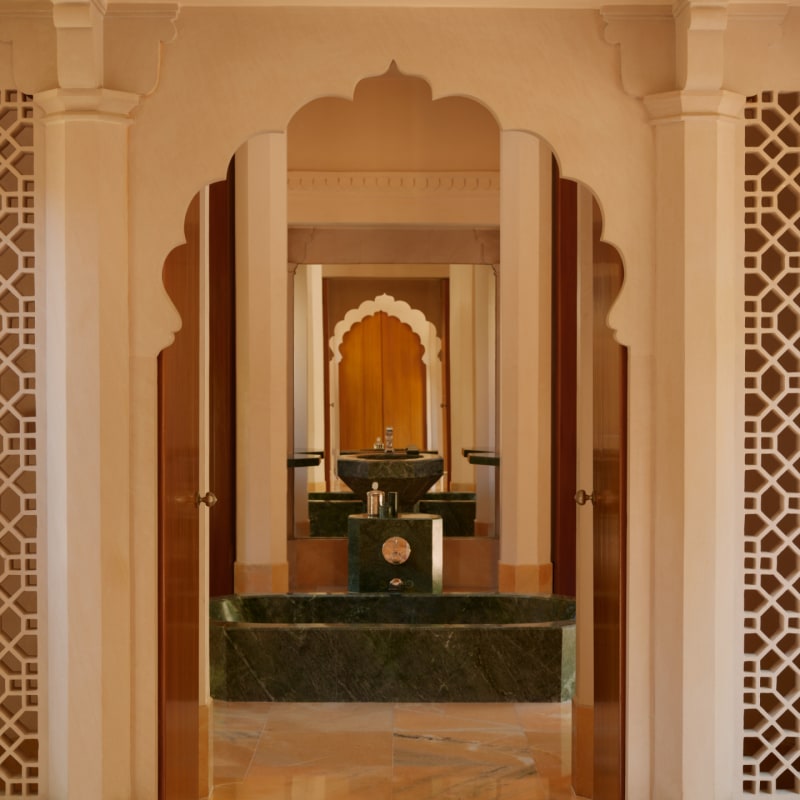
There are 16 Pool Pavilions and 24 Havelis. Pool Pavilions are set around the perimeter of the resort, each with their own private pool and garden. The Havelis are set amongst the date and mango trees with their own private courtyard, garden or balcony. All suites feature a large bathtub carved from Udaipur green marble and are fitted with Bose sound systems and a personal bar.

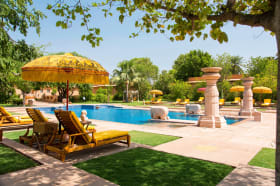
As well as a large swimming pool, Aman Spa, informal dining area and wading pool, there is a well-stocked library and a roof terrace elevated above a canopy of trees, which has fabulous views over the surrounding countryside.

The hotel can also organise a multitude of activities in the surrounding countryside including visits to forts, temples and villages, yoga and meditation by a lake, private dinners and even a ‘Sunset Cow Dust Tour’.

Accommodation

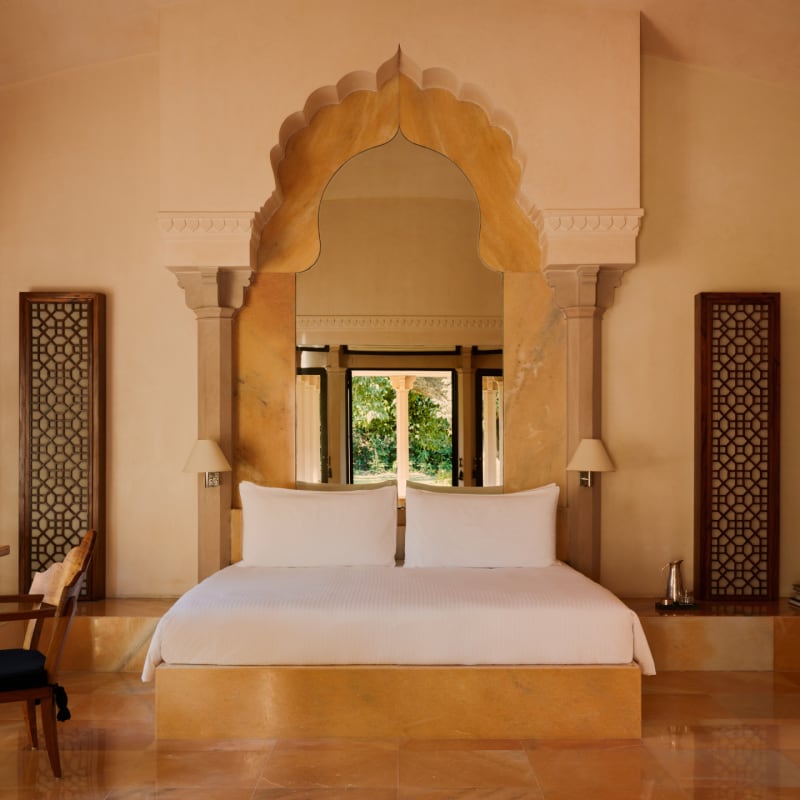
Amanbagh offers guests 8 Courtyard Haveli Suites, 8 Garden Haveli Suites, 8 Terrace Haveli Suites and 16 Pool Pavilions. Suites feature king size beds, large bathtubs carved from Udaipur green marble and are fitted with Bose sound systems and a personal bar. Some feature private terraces.

Childcare

Children welcome but no facilities

Facilities

Facilities at the hotel include a lounge, library, boutique selling a great selection of the region’s silverware, jewellery, textiles and fashion, swimming pool and spa offering a range of healing therapies as well as facials, massages, scrubs and traditional henna art. Organic herbs and vegetables grown in the hotel's organic kitchen gardens form the basis of mouthwatering Indian and Western dishes in the hotel's restaurant.

Activities

Nature excursions offered by the hotel include visits to the lakes of Somsagar and Mansarovar and Sariska National Park that covers an area of 765sq km and home to wildlife such as tigers, leopards, panthers, wildcats, caracals, neelgai (blue bull) antelope, chital, sambar deer, wild boar, jackals, as well as langur and macaque monkeys. Recently, tigers have been reintroduced with a number brought from Ranthambore Reserve and released in Sariska.

When to travel

The climate of Alwar is quite dry. Summers (May to June) are very hot with an average maximum temperature of 41°C and an average minimum of 28 °C (Amanbagh closed from Mid May to Mid July). Monsoons (July to September) are associated with mild to medium showers intermittently. Winters (November to February) are cool and pleasant with minimum average reach down to 8°C approximately. The best Season to visit Alwar is during October to March, which offers a cool breeze and pleasant climate and suitable for sight seeing. July to September months are enjoyable with mild showers and moderate temperatures. Temperatures rise rapidly from early April through to June when the hotel closes, as these months are very hot and humid.

Jan
Feb
Mar
Apr
May
Jun
Jul
Aug
Sep
Oct
Nov
Dec
Best time to visit
Good time to visit
Average time to visit
Not applicable

Location and directions

Alwar, India

Amanbagh rests amid aromatic eucalyptus trees in the foothills of the Aravali Hills, near Alwar in northern India.

How to get there

The closest airport for major international flights is Delhi's Indira Gandhi International Airport, a 4.5 hour drive away. Jaipur Sanganer International Airport services domestic routes as well as international flights from Dubai, Bangkok and Singapore. From Jaipur it's a 90-minute drive to Amanbagh.


back to the top
Contact us
Like us