Price guide
Reviews (3)
Ngorongoro Crater Lodge is recommended for
Luxury Lodge 0 Adventure3Wildlife3Honeymoon2Parties & events2

At a glance

  • Fabulous views over the Ngorongoro Crater

  • Stunning and opulent rooms

  • Watch the game grazing in front of your room

  • Sit and have dinner under the chandeliers in the dining room.

  • Loo with the ultimate view

Description

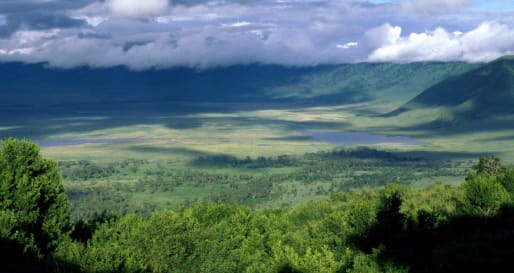
The Ngorongoro Crater is the remains of a once massive volcano, nearly three million years old, on the eastern border of the Serengeti National Park. Now collapsed and eroded to leave the world's largest unbroken caldera, it forms an extraordinarily fertile ‘bowl’ in the midst of rolling highlands, with permanent water sources and steep sides ensuring that the wildlife that thrives here has little reason to leave.

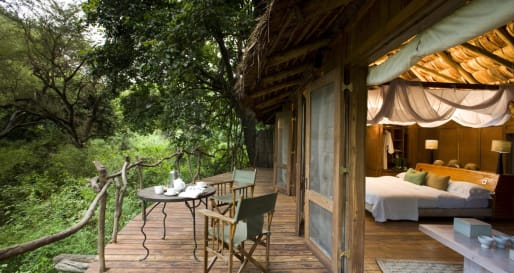
The Crater Lodge has 30 suites, divided between three adjacent camps: North and South Camps, comprising twelve suites each, and the more intimate Tree Camp, with six suites. Each camp has its own viewing deck, grand sitting room and dining room with their entrances dramatically illuminated at night by large fire bowls. The stone-built suites all include a private viewing deck, fireplace, spacious en suite bathroom - with free-standing, chandelier-lit bathtub - and is discreetly attended by a private butler. Their luxurious, colonial-style interiors are decorated with sumptuous fabrics, gilt-framed mirrors and carved Zanzibar wood panelling, and the floor-to-ceiling windows have spectacular views of the crater.

Activities include twice-daily game drives, crater picnics and sundowners, guided walks and Maasai cultural visits, as well as visits to the nearby Olduvai Gorge, made famous by the Leakeys’ archaeological discoveries in the 1940s and 50s.

The Crater comprises areas of grassland, swamps, lerai forest (small patches of forest made up of yellow-barked acacia and yellow fever trees), and Lake Makat, a central soda lake filled by the Munge river.

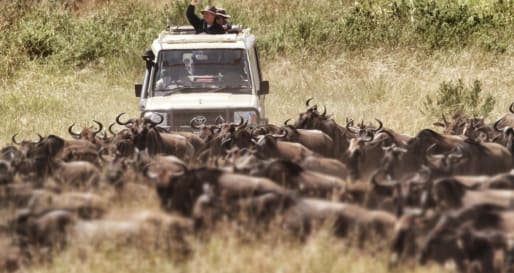
These habitats attract all kinds of wildlife to drink, wallow, graze or hide, and although the animals are free to move in and out of this contained environment, the rich volcanic soil, lush forests and spring-fed lakes on the crater floor incline both grazers and predators to remain.

Ngorongoro Crater is one of the last remaining areas in Tanzania where you are likely to see the endangered Black Rhino: a small population is thriving in this idyllic and protected environment, and it remains one of the few areas where they continue to breed in the wild.

Accommodation

North and South Camp have 12 suites and the spectacular Tree Camp has just six.

Each stilted suite is sumptuously furnished with panelled walls and floors made of Tanzanian hardwoods, rich raw silk curtains, hand-beaded chandeliers, gilt mirrors, a fireplace and a butler’s lobby. The en suite bathrooms are all furnished with fresh red roses beside a chandelier-lit bathtub.The suites all feature decks with magnificent views of the Crater floor.

Childcare

Although there are no specific child care facilities, children over five years old are welcome.

Safari drives from here are unsually simple and rewarding without a huge drive required, and accommodation is private enough for childish antics to feel relatively guilt-free. Babysitting, most necessary for enjoyment of all, is also available, either during the evening or daytime, by arrangement.

Facilities

Each camp has a sitting and dining room, an outdoor dining area and viewing decks. The sitting rooms have woven banana bark ceilings and are adorned with hand-beaded chandeliers, carved and gilded wall plaques, brocade sofas, Persian carpets, candles and bowls of red roses. The domed dining room with its welcoming fireplace, crystal, silver and massive wooden platters is the perfect place to enjoy fine cuisine.

Activities

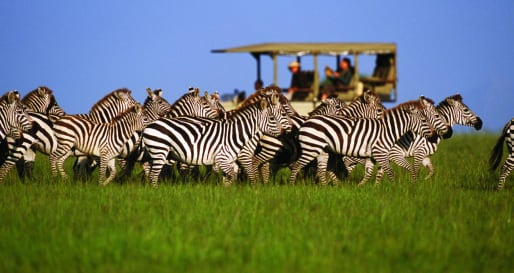
Game drives are limited to just one safari into the Crater each day, either as a morning or afternoon game drive and regulations insist that vehicles must be closed-sided, but they do have pop-up roofs. This is a frustratingly short safari window, but does ensure a more enjoyable, less crowded experience. The Lodge also offers guided walks on the crater rim which is the domain of the Maasai pastoralists, and a stunning area of natural beauty to explore.

Services

Every suite is serviced by a butler who is only a radio call away and will make sure your stay is as comfortable as possible. The butler will arrange everything, from lighting your fire in the evening to organising a bush picnic on a game drive - no request is too much trouble.

When to travel

Tanzania is a large country, with a varied climate. Generally, the long rains run from March to May - the temperature is warm and the humidity is high. June to October is the long dry season, and the short rains are in November and December, much lighter than the long rains. January and February are again dry (the short dry season) so this is another good time to visit.

Jan
Feb
Mar
Apr
May
Jun
Jul
Aug
Sep
Oct
Nov
Dec
Best time to visit
Good time to visit
Average time to visit
Not applicable

Location and directions

Ngorongoro Crater, Tanzania

Perched on the edge of the famous Ngorongoro Crater, Tanzania. One of the Wonders of the World and a designated World Heritage Site. At the eastern edge of the Serengeti, and nearly three million years old, Ngorongoro is one of the most perfectly formed and certainly the most spectacular calderas on the planet.

How to get there

A number of scheduled airline services operate a twice-daily scheduled flight from Arusha Airport to Manyara airstrip. Ngorongoro Crater Lodge transfers guests to and from Manyara airstrip by closed game viewing vehicle – approximately 1.5 hours.


back to the top
Contact us
Like us