

Facilities
Spa
Spa
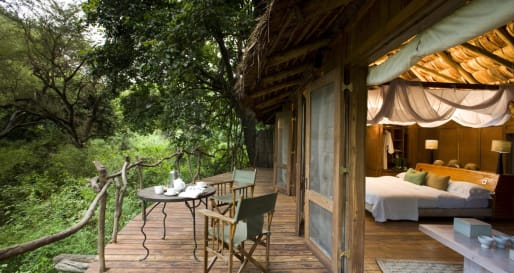
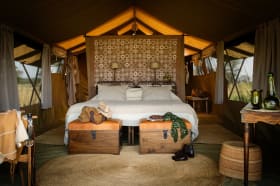
Serengeti Under Canvas offers two luxury mobile camps which roam the Serengeti plains and beyond, following the wildebeest as they migrate. Each semi-permanent camp has nine Meru style tents all with elegant finishes of Persian rugs and chandeliers.
Serengeti Under Canvas has luxurious fittings you can expect Swarovski binoculars in each room and a barista to make delicious coffees to wake you up before your exciting game drive.
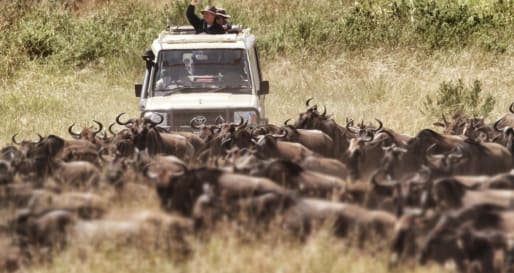
Being a mobile camp you are as close as possible to the thundering hooves of the wildebeest migration as the camp strategically positions itself in different locations throughout the year.
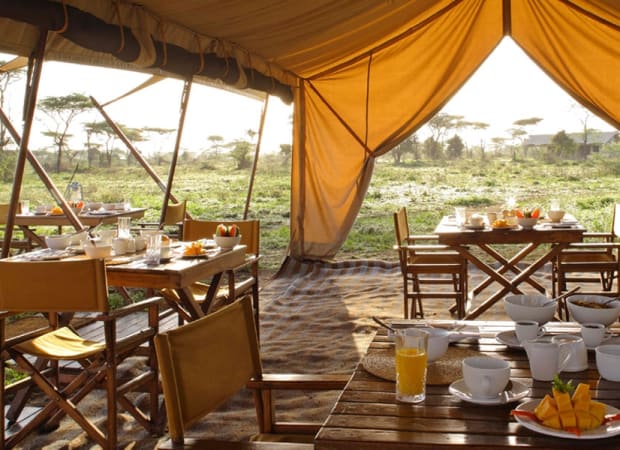
Have sundowners in front of a roaring fire swapping stories of the sightings you had that day before cosying up in a beautifully appointed open tent for delicious dinners, or under the star filled sky if you’d prefer!
This camp gives a real sense of old safari glamour with beautiful rugs, supremely comfortable beds and brass fittings with the excitement of a heated bucket style shower.
Serengeti Under Canvas is a raw African experience with all the luxuries you would expect from the safari experts. You will stay in one of the two semi-permanent camps which move between various locations, staying off the beaten track and following the herds of buffalo and wildebeest that migrate across the Serengeti.
Each camping site is pre-booked exclusively, allowing for great flexibility in following the sometimes unpredictable movements of the migration. It is ultra comfortable with stylish safari tents, large beds, and en-suite bathrooms with flush loos and bucket showers. The expert team will look after your every need during your stay at one of the camps, and will make sure you have an adventure to remember. Gathering around the campfire each evening is a safari tradition but, when you feel like some quiet time or a romantic evening alone, you can have dinner served in your private dining tent, right next to your room.
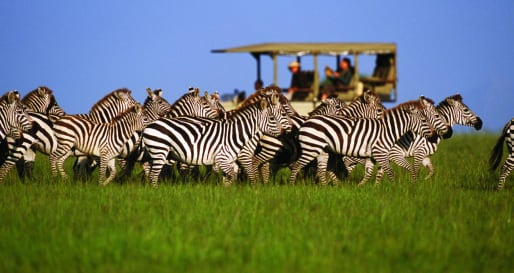
The Serengeti is home to literally millions of large herbivores, with more than 35 species of plains-dwelling mammals, as well as the accompanying carnivores and prolific birdlife. The mobile nature of the Serengeti Under Canvas camps means that they are uniquely suited to give guests a close glimpse of the Great Migration, as well as the Serengeti’s numerous other wildlife riches. Each year, almost two million wildebeest, zebra, eland and Thomson’s gazelle follow the annual rains through the Serengeti and the adjacent Maasai Mara National Reserve in Kenya in search of prime grazing.
As the dense herds of herbivores move across the plains they are shadowed by predators and scavengers. Lion, and hyena, as well as the more elusive cheetah and leopard, mingle with the migrating masses, while vulture and jackal await the scraps of the more powerful predators. The Serengeti is famous for its large lion population and a number of lion prides are present in each of the areas utilised by our camps. The far lighter and faster cheetah are also present. During the migration, the spotted hyena may be spotted wandering among the herds in the plain light of day.
When to visit
Use this excellent mobile camp to get close to the great wildebeest migration.
Speak to an Expert on Tanzania
Our team of travel specialists are waiting to help you book your next adventure.
Enquire NowSpa
Serengeti Under Canvas moves throughout the Serengeti National Park, changing location to follow the movements of the Wildebeest migration (it will not move during your stay). Camp movements are pre-planned in an effort to be within reach of the herds, but this cannot always be guaranteed given the unpredictability of nature and weather conditions.
Fly-in to the Serengeti airstrip nearest to the camp (Seronera, Ndutu, Grumeti, Kogatende). Guests will be collected and transferred to the camp.
Ultimate Tanzania
A luxurious and iconic trip taking in some of Tanzania's true highlights and staying at some of the best properties in East Africa. Explore the Rift Valley's wildlife-rich national parks, Masai culture and dramatic scenery, before flying to a pristine beach on the east coast of Zanzibar.
Game drive in the Serengeti
Explore the vast grasslands of the Serengeti with your safari guide on game drives in the early morning and late afternoon. This is one of the most famous national parks in Africa, and it's easy to see why.
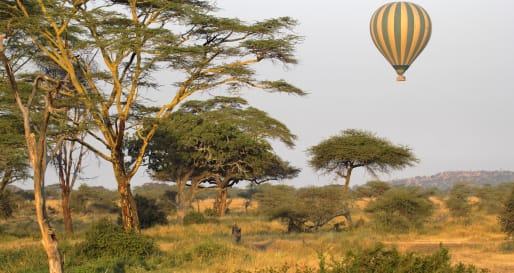
Hot air ballooning over the Serengeti
Soar over the Serengeti's savannah plains in a hot air balloon at dawn, watching wildlife beneath you & finishing with a champagne bush breakfast.
Search for the migration herds
One of Africa's most iconic moments - the migration of two million wildebeest, zebras and gazelles around the Serengeti-Maasai Mara ecosystem.